
Job hunting can feel like a full-time job, and an awkward one at that. Especially if you are an introvert marketer.
But here’s the thing: you already know how to market something. You have done it for brands, products, and SaaS platforms. You understand funnels, CTAs, and positioning.
So why not apply what you’re already good at for your own good?
Step 1: Define Your Target Audience
If job hunting is your campaign, your audience is everything. But unlike an ad campaign, your audience is not defined by demographics or interests.
Let’s break down your potential segments.
A. Recruiters: The Top-of-Funnel Gatekeepers
Recruiters are your top-of-funnel awareness stage. They do not have final say, but they control visibility. Their goal is simple: filter, shortlist, and move fast.
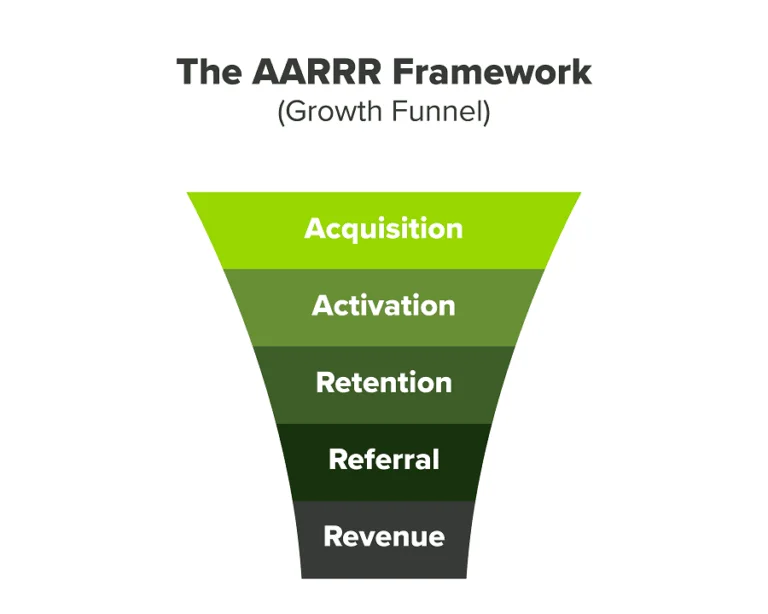
They skim profiles in seconds, so you need clarity, not poetry. Think of recruiters as your SEO algorithm. They do not read for nuance; they scan for relevance.
Pro tip: Mirror their language. If a job post says “growth strategy,” not “marketing innovation,” you say “growth strategy.” Optimize like you would for Google, because in their inbox, you are one of a hundred results.
B. Hiring Managers: The Decision-Makers
Hiring managers are your middle-of-funnel audience. They are not looking for buzzwords; they are looking for competence. They ask, “Can this person solve my problem?”
They care about outcomes, not adjectives. Focus on results over roles.
- Increased organic traffic by 60 percent in 4 months.
- Reduced acquisition cost by 25 percent using audience segmentation.
Introverts tend to shine here because data talks louder than self-promotion.
C. CMOs and Marketing Directors: The Strategic Audience
These are your bottom-of-funnel decision-makers. They think long-term and look for alignment. They want to know if you understand brand narrative, retention, and customer lifecycle.
For them, storytelling is your differentiator. Use your portfolio, blog, or case study to show how you think, not just what you have done.
D. Agencies: The Hustle Testers
Agencies thrive on speed and adaptability. They want marketers who can juggle campaigns, clients, and caffeine without losing focus.
Show range, from SEO to PPC, from strategy to execution, but keep it grounded in measurable impact.
E. Founders and Startups: The Vision Hunters
Startups do not want employees; they want co-conspirators. They value initiative and scrappiness over polish. Show that you have built things, not just managed them.
Prove that you can think like an owner – someone who spots problems, builds solutions fast, and doesn’t wait for permission to make things better.
F. Fellow Marketers: The Peer Network
Sometimes your next opportunity does not come from HR. It comes from a DM.
Peers notice your thought leadership, not your cover letter. Contribute insights, comment thoughtfully, and let quiet credibility do the rest.
Step 2: Craft Your Positioning – Your CV as a Landing Page
Your CV is not a biography. It is a conversion tool. Think of it as a landing page that sells one thing: you.
Recruiters spend an average of six seconds scanning a CV. That is literally shorter than a TikTok ad. So you need structure and clarity, not fluff.
Here is how to treat your CV like a marketer would.
- Headline equals your USP. Your title should reflect what you want next, not what you did last. “Growth Marketer Specializing in B2B Funnels” beats “Marketing Professional.”
- Hero section equals your value proposition. In two to three lines, explain who you help, what you deliver, and how. Example: “I help SaaS startups grow user acquisition through data-driven content and SEO strategy.”
- Body equals proof points. Each bullet should follow the structure Feature, Benefit, Proof.
Instead of saying:
“Responsible for social media content.”
Say:
“Created multi-channel content that increased engagement by 60 percent and lowered CPC by 22 percent.”
Numbers are your testimonials, and every marketer knows they convert better than adjectives.
Design matters too. White space beats gimmicks. Readability beats creativity. If your CV looks like a dense email from 2012 (or worse, a homepage from 2002), you are already losing traffic.
Step 3: Perfect Your Cover Letter (The Ad Copy Everyone Hates Writing)
Everyone hates writing cover letters. They feel awkward, repetitive, and often sound robotic. But skipping them is a mistake. The cover letter is the only part of your funnel where you can sound human.
Think of it as ad copy: short, emotional, and designed to move one person, the hiring manager, to click reply.
Use the simple structure marketers already know. Hook, Value, CTA.
- Hook. Start with a problem or punchline, not “I’m excited to apply.”
Example: “After helping a SaaS brand grow 5x in traffic without ad spend, I’m looking for my next growth challenge with a team that values experimentation as much as execution.” - Value. Sell your outcome, not your effort.
Example: “In my last role, I scaled inbound leads by 80 percent through SEO-driven content and automation workflows.” - CTA. Ask for a conversation, not a job.
Example: “If that is the kind of growth you are after, let’s talk.”
Thankfully, an AI cover letter generator can make this process even easier.

You can create tailored letters in minutes by matching your resume, the job description, and your tone of voice.
Step 4: Automate and Measure Like a Marketer
You probably already use dashboards and track numbers for each of your marketing campaigns. So why not do that for your whole career?
1. Treat your job search like a campaign
Every job application is a campaign touchpoint. Your LinkedIn visibility is awareness, your interviews are consideration, and your offers are conversions.
Track them like you would a marketing funnel:
| Funnel Stage | Job Search Equivalent | Metric to Track |
| Awareness | Recruiter views or LinkedIn impressions | Profile views, search appearances |
| Consideration | Applications to interviews | Response rate (CTR) |
| Conversion | Interviews to offers | Offer rate (conversion percent) |
When you measure, you improve. The data shows you where to double down and where your funnel is leaking.
2. Automate the boring stuff
You do not need to manually follow up or drown in spreadsheets. Use tools you already know.
- Notion or Airtable as your personal CRM to track leads (companies), contacts (recruiters), and pipeline (interviews)
- Zapier or Make (Integromat) to auto-tag responses or reminders
- Google Sheets, if you prefer an old-school dashboard, because who does not love a clean KPI column?
Even better, automate follow-ups with personalized templates. Think of it as lead nurturing: polite, consistent, and on-brand.
3. Analyze and iterate
If you are getting profile views but no callbacks, your messaging (CV) needs optimization. If interviews go well but offers stall, your conversion copy (cover letter or presentation) might need a tweak.
Use the same mindset you would bring to a campaign post-mortem. Ask yourself:
- Where did engagement drop?
- What variable changed?
- What can I test next?
Job hunting is not about sending 100 resumes. It is about identifying what works and scaling that.
Step 5: Play the Long Game (Retention and Brand Loyalty)
In marketing, customer retention is key: the best ROI comes from repeat customers. The same is true for your career.
Therefore, you need to nurture your network like an email list. Stay top-of-mind with thoughtful follow-ups, shared insights, and real conversations. Be the name people remember when an opportunity opens.
Keep creating, even when you are not job hunting. Share insights, post case studies, write about what you have learned. Each post is a brand touchpoint. Each interaction is another impression in your long-term awareness game.
Re-engage old contacts, too. That recruiter who ghosted you? Follow up months later, not to ask for a job but to share what you have been working on. That is retention marketing in action.
You do not need to network louder; you need to stay in the game.
Conclusion
Introverts are wired for precision, not noise.
Define your audience. Craft your message. Build your funnel. Measure your results. Then play the long game.
Like you would do for any other marketing aspect, so why not for your marketing career per se?

I write for GrowthRocks, one of the top growth hacking agencies. For some mysterious reason, I write on the internet yet I’m not a vegan, I don’t do yoga and I don’t drink smoothies.