
For years, online communities followed a familiar formula. Create a forum, divide it into topics, invite people to join, and hope that conversations emerge.
That model worked when the internet was smaller, attention was easier to earn, and joining a professional community felt like gaining access to knowledge that could not be found elsewhere.
The world has changed.
Information is now everywhere. AI can answer a question in seconds. Professionals participate in global networks while working across different languages, industries, and time zones. At the same time, people have less patience for endless feeds, repetitive discussions, irrelevant notifications, and communities that demand more time than the value they return.
Building another forum is no longer enough.
This is why we started thinking about what a Community 2.0 should look like. Not simply a redesigned website or a traditional community with a few AI features added to it, but a new environment built for the way people learn, collaborate, and grow today.
A community that respects your time
The biggest problem with many online communities is not a lack of content. It is the opposite.
There are too many posts, too many links, too many notifications, and too many conversations to follow. Valuable insights are often buried beneath content that is repetitive, promotional, or no longer relevant.
A modern community should not measure success by how much content it produces or how long members remain inside the platform. It should measure how quickly someone can find something useful.
That is why Community 2.0 must prioritize signal over noise.
When someone shares a link, members should not have to open it, scan a long article, and decide whether it is worth their attention. The community can provide the gist, identify the main takeaways, and help members understand why the link matters.
When a discussion becomes long, members joining later should not need to read every reply. AI-generated summaries can explain what has been discussed, where people agree, and which questions remain unanswered.
The objective is not to encourage people to consume more. It is to help them understand more in less time.
AI should be in the room
Most communities treat AI as an additional feature. It appears as a chatbot in the corner, separated from the conversations happening between members.
We believe AI should have a different role.

In Community 2.0, AI sits beside people. It helps members draft posts, improve questions, summarize discussions, translate contributions, suggest replies, and turn shared knowledge into something more useful.
This is not about replacing human participation. A community without people, experience, disagreement, and personality is simply another information database.
AI can provide an answer, but a practitioner can explain what happened when they tried it. AI can summarize a method, but a founder can describe why it failed inside a real business. AI can suggest best practices, but experienced professionals can explain when those practices should be ignored.
The value comes from combining the two.
Human members contribute judgment, context, lived experience, creativity, and accountability. AI helps organize, translate, clarify, and expand that knowledge. Together, they can create something more valuable than either could create alone.
That is what it means to build an AI-native community. AI is not attached to the experience after the community has been designed. It is part of the environment from the beginning.
Language should no longer define who can participate
Many professional communities describe themselves as global while expecting every meaningful conversation to happen in English.
This creates an invisible barrier.
People may be able to read and write in English, but that does not mean they can communicate with the same confidence, precision, or personality they have in their own language. Valuable ideas are often simplified or never shared because members are forced to translate their thinking before they can participate.
Community 2.0 should remove that compromise.

A member can write in French, Greek, Japanese, Spanish, Arabic, or whichever language feels natural. Other members can read the contribution in their own language. Replies can travel back across the same language boundaries.
The objective is not just translation. It is participation without linguistic disadvantage.
A marketer in Athens should be able to exchange ideas with a founder in Paris, a product manager in Tokyo, and a growth leader in São Paulo without deciding which person must adapt.
This changes the potential of a global community. It gives more people a voice and introduces perspectives that English-first communities frequently miss.
When language stops being a barrier, geography becomes far less important.
Trust cannot depend entirely on moderators
Traditional communities often rely on a small moderation team to review everything. That approach becomes increasingly difficult as a community grows.
Centralized moderation can also make members passive. People expect someone else to protect the quality of the environment while taking little responsibility for maintaining it themselves.
Community 2.0 needs a more distributed model of trust.
Clear rules establish what the community expects. Peer reporting helps members identify behavior that reduces the quality of the space. Reputation systems recognize those who consistently contribute useful ideas, provide thoughtful answers, and behave as good citizens.
AI can support this process by identifying spam, repeated promotion, suspicious activity, or conversations that may require attention. However, final judgment should not be delegated blindly to an algorithm.
Self-moderation does not mean the absence of governance. It means giving the community an active role in protecting what makes it valuable.
The strongest communities are not controlled only from the top. Their culture is maintained by the people inside them.
Reputation should reflect contribution, not popularity
Most social platforms reward visibility. The people who post most frequently or already have large audiences receive more attention, regardless of whether their contributions are useful.
A professional community should reward something different.
Reputation should come from helping others. It should reflect the quality of a member’s contributions, the usefulness of their answers, their willingness to share experience, and the trust they build over time.
This is particularly important in the age of AI-generated content. Producing more words is no longer difficult. The scarce resource is not content. It is credible judgment.
A Community 2.0 must learn to distinguish between activity and contribution.
One thoughtful answer based on years of experience can be more valuable than fifty generic posts. A good reputation system should make that difference visible.
The feed should help people think
The infinite feed became the default interface of the social internet because it maximized consumption. It was designed to keep people scrolling.
That should not be the objective of a professional community.

A useful feed should help members find relevant discussions, discover valuable people, and understand what has changed since their last visit. It should provide context instead of simply presenting an endless sequence of posts.
AI can help personalize this experience. A founder exploring product-led growth should not receive the same feed as an SEO specialist researching AI search visibility. A new practitioner may need foundational discussions, while an experienced executive may want deeper strategic debates and evidence from real implementation.
Personalization should not create an echo chamber. Members still need exposure to unfamiliar ideas and opposing opinions. But the community should understand that relevance is part of respecting people’s time.
The goal is not to create the longest possible session. It is to make every session worthwhile.
Community is becoming part of the work itself
The traditional community existed outside the work. Members visited it to ask questions, read posts, or network with other people, and then returned to their tools to take action.
AI creates the possibility of bringing these two environments closer together.
A discussion can become a brief. A collection of replies can become a playbook. A shared link can become a summary. A conversation about an experiment can become a plan that another member can adapt.
The community stops being only a place where knowledge is stored. It becomes a place where knowledge is transformed into action.
This is especially important for growth professionals. Growth rarely comes from isolated knowledge. It comes from connecting ideas, testing them, learning from the results, and adapting quickly.
Community 2.0 should support that complete cycle.
A new chapter for GrowthHackers
GrowthHackers was built around a simple but powerful idea: professionals grow faster when they share what they learn.
That idea remains relevant. What must change is the environment around it.
The next generation of the GrowthHackers Community is designed for professionals who work globally, collaborate with AI, and cannot afford to spend hours searching for one useful insight.
It is a place where humans and AI grow together. Members can communicate in their own languages, understand one another across borders, turn links into clarity, summarize complex conversations, and collectively protect the quality of the space.
This is not a community with AI added to it.
It is a community built for a world in which AI is already part of how we think, create, communicate, and work.
Building the community we now need
Community 1.0 was about access. It gave people a place to meet and exchange information.

Community 2.0 is about intelligence. It helps people understand one another, identify what matters, and turn collective knowledge into progress.
The technology is important, but it is not the final objective. The objective is to create a more useful human experience.
A community that respects your language.
A community that respects your intelligence.
A community that respects your limited time.
A community where AI is at the table, but people remain at the center.
That is the community we want to build.
Enter the new GrowthHackers Community
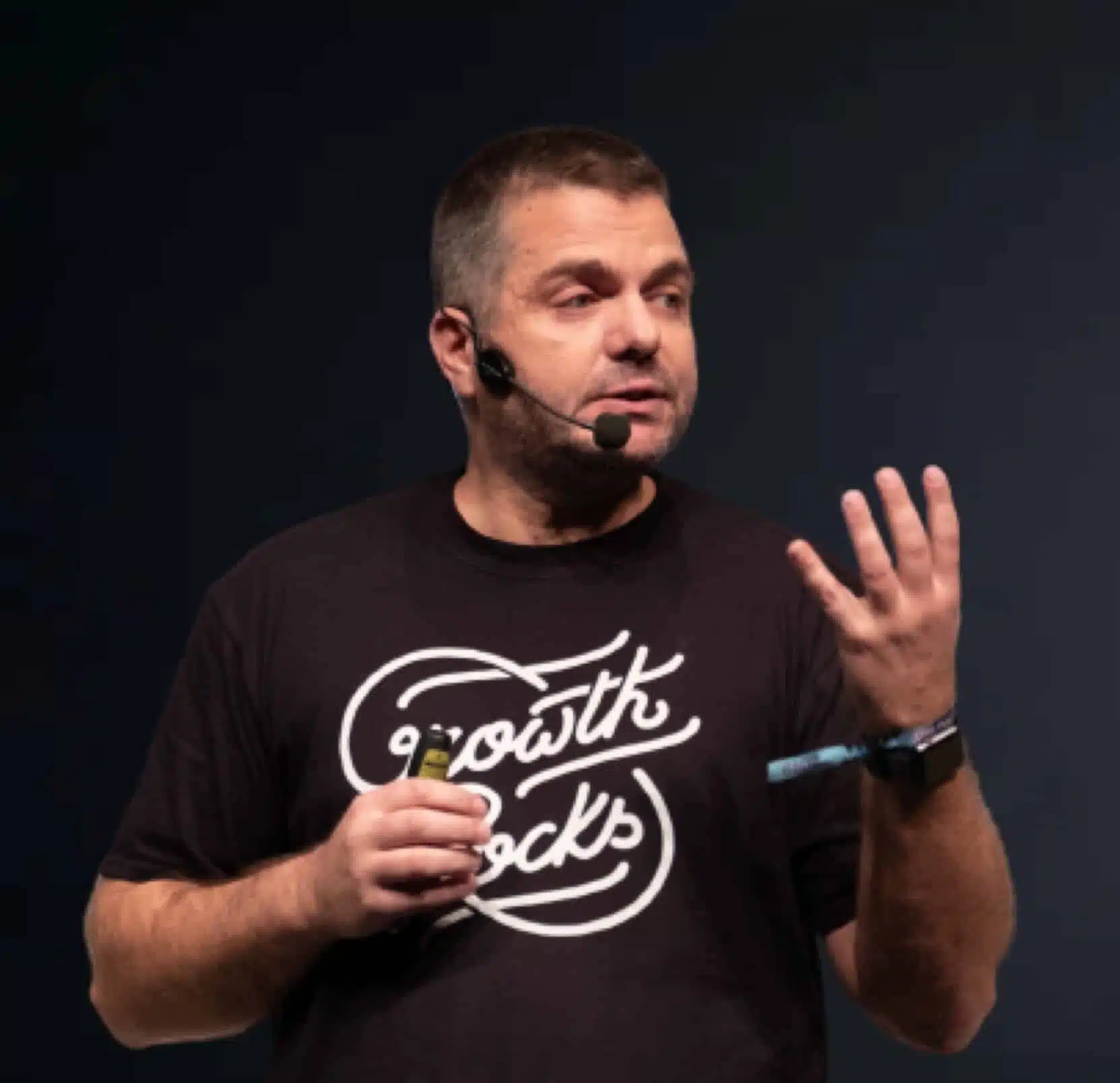
Theodore has 20 years of experience running successful and profitable software products. In his free time, he coaches and consults startups. His career includes managerial posts for companies in the UK and abroad, and he has significant skills in intrapreneurship and entrepreneurship.